
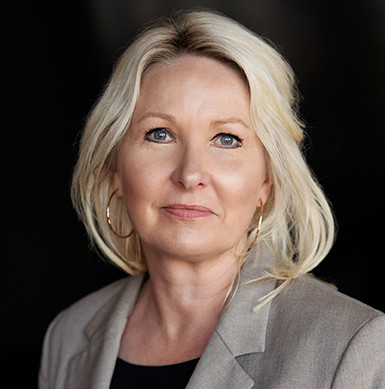
 Today on Meet the Author we’re featuring Coral Vass. Coral is an award-winning Australian children's author. She has always loved telling stories and has been writing books for fifteen years. With numerous best-sellers, Coral's awards include the 2018 Speech Pathology Awards for Best Book for Language and Literacy Development—Indigenous Children, the 2019 CBCA Book of the Year Eve Pownall Award and the 2021 CALEB Picture Book of the Year Award. She has also been shortlisted for the REAL Awards, voted by the children of Australia.
Coral’s latest book is On the Outside, one of the Rhiza Shorts books—a series written for reluctant or time-poor readers. This novella tackles issues such as rising racial tensions and community division.
Why is On the Outside meaningful to you?
I spent my early years in Bangladesh and grew up in Melbourne in the ’80s and ’90s as Australia was establishing itself as a multicultural country, so the themes of this book—combating racism, promoting inclusion and encouraging voice—resonate with me.
In Bangladesh, my parents dedicated their lives to supporting the poor and marginalised. I grew up in an environment that taught me to value the dignity and rights of every person. It also made me aware of what it feels like to be an outsider.
In 2001, my husband and I lived and studied in Indonesia, and in 2007, we moved to Japan for three years. These experiences deepened my love for people and strengthened my respect for the richness of different cultures.
While Australia is a multicultural country, racism is still as rife today as ever before. I have witnessed it not only within my own culture but also in the various countries I’ve called home.
For me, combating racism begins with recognising the humanity and individuality of every person—allowing voices to be heard and room to participate and contribute. My experiences of living across different cultures have taught me that listening to someone's story can be powerful. It can bring fresh perspective, challenge prejudice and help to bridge divides.
Did you do any research? Did it help you get a better feel for the story?
Yes, I did a lot of research. I did a deep dive into the Cronulla Riots of 2005. I also did a lot of research around Sept 11, 2001, reading people’s stories, interviewing survivors and understanding how this one event not only changed the course of history but changed people’s attitudes and perceptions in so many ways.
Doing the research certainly helped me get a better feel for and equipped me to be able to write this story.
How many books have you had released?
I have been writing for more than 15 years. My first book, Goodnight Possum, was published in 2011. To date, I have over 30 published children’s books, with more on the way in 2027.
What do you hope readers will take away from your stories?
A friend pointed out recently that a lot of my stories are about justice, empathy, inclusion and helping people find a voice. It’s always my hope that through stories, whether they are true or not, we learn, growing in our understanding and compassion for one another. Through this particular story, I hope to show that when we move beyond fear and misunderstanding, whether related to culture, religion or gender, we open the door to compassion and connection.
If you could only read one genre for the rest of your life, what would it be?
I have always been fond of true stories, particularly biographies. There’s something compelling about reading about a person’s life—their experiences, struggles, choices, triumphs and failures.
I am a firm believer that no one can argue with someone’s story. We may question a person’s interpretation of events, disagree with their choices or see their experiences from an entirely different perspective, but we can’t deny that their story is theirs to tell. I’m fascinated by true stories, as they invite us to listen, understand and see the world through another person’s eyes.
How important is it to read books when you want to be an author?
I am asked this question a lot during my school visits. My answer is absolutely YES. Read, read and read some more. The more you read, the better writer you become. Learn as many ways of using language as possible. Build a massive bank of different words in your head that you can choose from at any time. Reading is such an important part of writing.
What advice would you give to writers just starting out?
Firstly, read, read and read some more. Visit libraries and bookshops. Stay up to date with the latest ways to write and what readers are interested in. Be a learner. Go to publishing conferences (like KidLitVic), do writing courses (AWC, for example), get to know the industry and those in the industry.
Get to know publishing etiquette—what to do and what not to do. Write every day. The more you write, the better writer you become. And finally, hold everything (especially your manuscript) loosely. Understand that once you’ve signed a contract, your story belongs to everyone—the publisher, the editor, the illustrator, the marketing team and the sales team.
Trust the process—understand and respect that publishers, editors and illustrators are experts in their field. Trust they will produce the best product possible.
Have readers ever contacted you? If so, tell us the best thing they’ve said to you.
I got one email from a young mum who had given birth to her baby at 23 weeks gestation. She said she couldn’t hold or even kiss her baby. All she could do was read to her baby each day in the neonatal ward, hoping and praying her baby would live. One day, she picked up a copy of The Great Bird Poo War in the hospital. She soon found herself in stitches, laughing as she read this book. She said she didn't have much to laugh about, but reading this simple picture book to her baby gave her some joy.
I got an email from another mother with a nine-year-old daughter who wasn’t verbal and had special needs. Her daughter’s favourite book is Goodnight Possum. She adores it and giggles every time they read it, always choosing that book and reading it at least three times a week.
Last year, when my Rhiza Shorts novella The Day the Bridge Fell came out, I was contacted by a man whose father was one of the workers on the Westgate Bridge the day it collapsed. He was only three at the time. He had a vivid memory of this tragedy from years later, when his father took him to a memorial under the bridge. That day, he was introduced to four children who’d lost their fathers in the tragedy and remembers thinking how lucky he was that his father survived. He said my book had a profound impact on him.
You can find out more about On the Outside here.
You can find out more about The Day the Bridge Fell here.
You can follow Coral via her website and social media:
Website: www.coralvass.com
Instagram: https://www.instagram.com/coralvass/
Facebook: https://www.facebook.com/coralvassauthor