
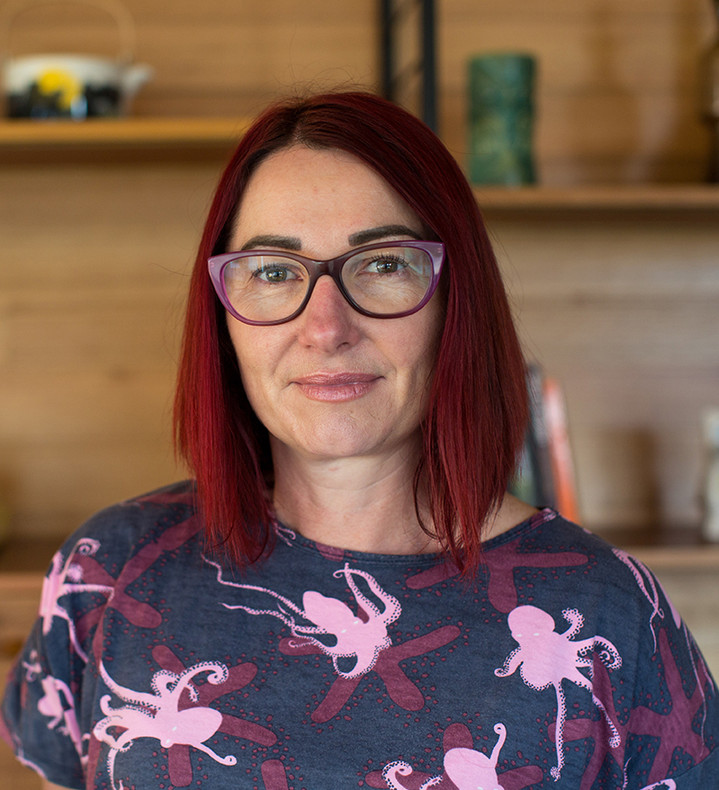
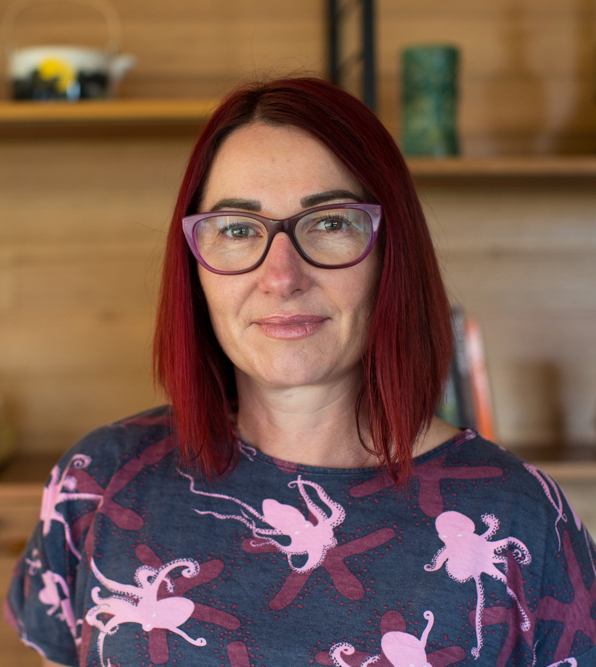
 Today on Meet the Author we’re featuring Stef Gemmill. Stef’s work often reflects her quest to understand the true meaning of ‘home’ after spending a short period in a foster home in her teenage years. She lives in the Victorian High Country in winter and on the Surf Coast in summer with her family and sleepy cat, Luna, the star of her award-winning book, A Home for Luna.
Stef’s first book with Rhiza Press is The Ghost Horse of Snowy River. Stef, tell us a bit about the story.
The Ghost Horse of Snowy River is a middle-fiction novel. It follows 12-year-old Georgie Stone, who returns to a cattle station a year after a serious horse-riding accident. She lost an eye, lost her horse and lost her country life.
As she struggles to overcome her fears and prepare for a gruelling two-week cattle muster, she encounters a mysterious herd of wild brumbies led by a majestic grey stallion known by locals as the Ghost Horse. Suspecting the stallion might be her lost horse, Magic, Georgie must find a way to prove it and protect him from a ruthless local horsewhipper named Goldburn.
Where did the inspiration for the story come from?
The spark of the story came from my lifelong obsession with horses. Growing up, I was completely horse-crazy and rode tough, tireless farm horses. I will never forget discovering that my grey horse, called Midnight, was once an inky black horse with this ‘mysterious’ life before I became his rider.
The story also reflects my sister’s riding accident, where she lost an eye and had to relearn how to move through the world. Without depth perception, simple things like walking straight or reaching for a cup became a challenge.
I also write stories about belonging and the true meaning of home after navigating my family’s mental health challenges and what happens when everything familiar is suddenly stripped away. Georgie and the Ghost Horse’s story grew out of that intersection—a girl trying to reclaim her place in the world alongside a wild animal fighting for his survival.
What do you hope young readers take away from the book?
I hope readers walk away with a sense of hope and self-belief when facing life's unexpected hurdles. Georgie faces massive, life-altering changes, but she discovers that courage doesn't mean you aren't afraid—it means finding the strength to move forward even when you are terrified. I also want young readers to connect with the unbreakable bond that can exist between humans and animals, and to think about our responsibility toward protecting wild spaces and the creatures that inhabit them.
Did you do any research for your book and did it help you get a better feel for writing it?
To bring the story to life, I had to swap my writer's desk for the saddle. I took up riding again specifically for this book and set off on a three-day trek through Mt Stirling in the High Country, camping overnight in the mountains with a cheeky stockhorse named Jimmy. Immersing myself in that environment allowed me to feel the physical toll of riding for days, the cold mountain nights and the unpredictable terrain.
Beyond the physical trek, I interviewed high-country legend Bruce McCormack (also an actor/stuntman in the movie The Man from Snowy River) to accurately capture the grit, language and high stakes of a traditional cattle muster to make this an authentic story. I also researched the history of wild brumbies and the environmental damage they create locally. To create a balanced view, I also visited the Mountain Brumby Sanctuary, which has rescued many of the Barmah brumbies from culling. The story gives kids something to chew on with the ongoing brumby debate.
Share your favourite section from the story that you enjoyed writing the most.
I clip my heels hard on her sides and turn her head to face downwards, hoping the steep drop doesn’t spook her. But how could I forget Faith is a mountain horse? Made of fiery muscle with hooves harder than flint rock, born here by the Snowy River. Without fear, she leaps headfirst, soaring over a fallen log.
We fly as one, with Ghost trailing tight on our tail.
What advice would you give to writers just starting out?
Don’t send your manuscript off to publishers until it has had significant edits, several sets of eyes on it, a professional assessment and it reads like someone else wrote it. You get one shot with your publisher submission. Don’t blow it.
Share three things that people may not already know about you.
-
I used to be a freelance music journalist by night and went to many free rock gigs in London in my uni days as a gig reviewer.
-
I was also an uber nerdy technical writer by day. Do you see where I am going with this?
-
I started up the Sketch and Scribe Festival last year for kidlit writers and illustrators. It’s a lot of hard work with a very low income but is the most rewarding writing kind of role I’ve had in my life.